5 lessons a 40,000-hour trio teaches about controlling a Rust server
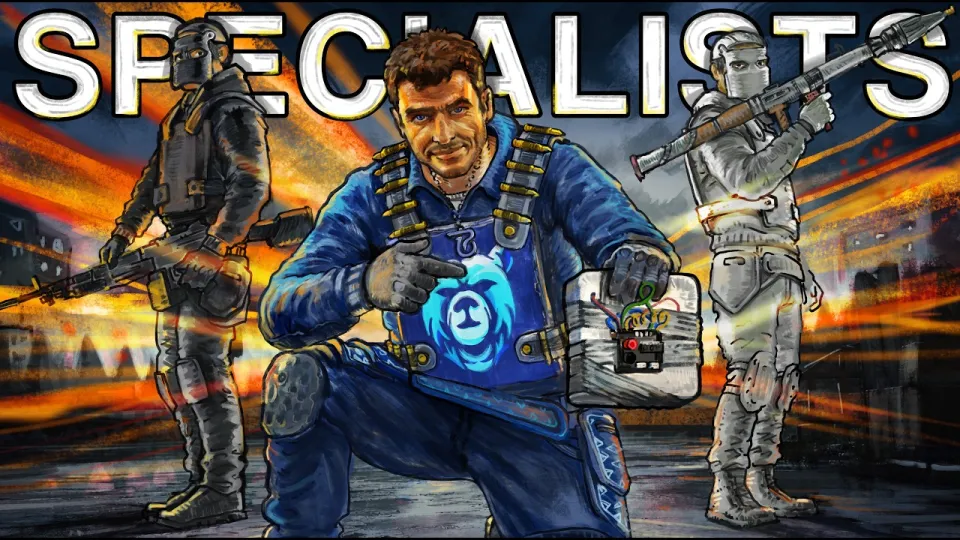
Video: How a 40,000-Hour Trio CONTROLS a SERVER - Rust
You can order the same kind of articles for your own video to boost it on YouTube and Google. Just message the Telegram bot @sat_sit_bot. It writes articles around your video, embeds the video and publishes them on popular niche websites (no ads). Free trial — 50 articles.
· based on the channel Blooprint
Key takeaways
- Blooprint, Disfigure and Nine bring roughly 40,000 combined hours into a fresh wipe on a 500+ population server.
- The wipe begins without big ambitions and escalates into raiding most of the server's competition.
- Trio play splits roles: a builder, a roamer and a coordinator who calls fights and manages the loot.
- Online raids and base defense decide who keeps momentum once the first big explosives are crafted.
- Gear fear is the main self-inflicted loss condition: top-tier kits only pay off when they leave the base.
A 40,000-hour trio controls a Rust server by converting early tempo into map pressure: they farm faster than neighbours, raid before rivals can build proper defenses, and then hold ground through online defenses. In "How a 40,000-Hour Trio CONTROLS a SERVER," Blooprint, Disfigure and Nine start a wipe with no grand plan on a 500+ pop server and end up raiding most of the competition. You can watch Blooprint live and catch the same group in action via Blooprint's Twitch channel.
Below are five practical lessons from that run, useful whether you queue as a duo, a trio or a solo trying to survive next to groups like this one.
Why hours beat gear in Rust trio play
Experience shows up as decisions, not as loot. Three players with 40,000 combined hours do not need the best kit on the server because they already know which fights to take, which to skip and when a base is worth the explosives. On a fresh wipe the mechanical gap matters less than the tempo gap: a veteran trio finishes its starter, secures a monument rotation and starts crafting explosives while newer groups are still arguing about where to build.
The same logic explains why the trio can dominate without a huge clan. Three coordinated players cover three jobs at once — farming, scouting and building — so the group's effective output is closer to six or seven average players. That is the real advantage behind the hour count.
1. Win the first hours of the wipe
The first hours set the ceiling for the whole wipe. A trio that lands, builds a compact starter near a monument and starts farming sulfur early will out-scale neighbours who spend the evening on cosmetics and base decoration. Blooprint's run escalated quickly precisely because the group treated the opening as a race rather than a warm-up.
Practical order of operations for a trio on a high-pop server:
- Split the drop: one player grabs tools and a bag, one scouts the build spot, one holds the starter materials.
- Get a small, cheap base with a working door and a sleeping bag before any upgrade.
- Lock a monument rotation and farm scrap for blueprints while the builder finishes honeycomb.
- Start sulfur and gunpowder production the moment the workbench allows it.
2. Build for defense, not for looks
A base on a 500+ pop server is a countdown timer, not a trophy. Compact footprints with layered doors, tight loot rooms and no obvious weak wall survive far longer than sprawling compounds that advertise loot through their size. The trio format rewards a base that all three players can defend from inside, with sightlines and peeks that let one player hold a raid while the others respawn and re-gear.
Two rules carry most of the value: never store all explosives in one room, and always keep a fallback spawn point with a kit ready. A base that survives one online raid usually survives the wipe.
3. Raid early and raid the right targets
Raiding is how a trio converts resources into map control. The math is simple: every base you break removes a competitor, feeds your group with loot and signals to the rest of the server that your area is expensive to contest. The mistake weaker groups make is hoarding explosives until the base is already surrounded by bigger neighbours.
Target selection matters more than raid size. Look for bases with poor door layering, players who roam visibly and groups that just lost a fight. On a high-population server, an early raid on a loud neighbour buys more than a late raid on a quiet one, because it changes who is willing to build next to you.
4. Survive the online and answer it
An online raid is the moment a wipe is decided. Defending players have the advantage of respawns, bags and stored kits — but only if those kits are actually stored and reachable. Groups that lose onlines usually lose them in the first two minutes, when nobody is geared and nobody is calling the play.
The trio answer is discipline: one player holds the breach, one flanks outside, one manages doors and loot. Voice comms should carry positions and counts, not panic. When the raid ends, the counter-push matters as much as the defense — hitting the attackers' base while their explosives are spent is often the cheapest raid of the entire wipe.
5. Drop gear fear and use the good kit
Gear fear loses more wipes than any raider. An M2 or an L9 sitting in a box protects nothing; it only guarantees that the group never gets the fights that justify crafting it. Veterans roam with top-tier weapons because the expected value of a good kit in the hands of a skilled player is higher than the value of the kit itself.
The flip side is real, and viewers notice it: when a group that normally lurks suddenly starts winning aim duels, the server talks. The honest answer is that gear plus practice changes outcomes fast, and the only way to close that gap is to take the same fights yourself.
Common questions about dominating a Rust server as a trio
Most doubts about runs like this come down to fairness, group size and whether the story is watchable without playing. A trio can absolutely control a high-population server, but not by out-farming clans — by picking fights, timing raids and refusing to lose kits to fear. Larger groups bring numbers; a coordinated trio brings tempo, and tempo wins early wipes.
For players who have never installed Rust, the appeal is the narrative: a wipe is a self-contained story with a start, rivals, betrayals and a final raid. That is why so many viewers follow long-form runs without ever touching the game.
Useful links
- Blooprint on Twitch — live streams and wipe runs
- Blooprint on Kick — alternative stream platform
- Blooprint on TikTok — clips and highlights
- Blooprint on Twitter — announcements
- Blooprint Discord — community and group-finding
What this trio run says about server control
Controlling a Rust server is a tempo problem before it is a skill problem: the 40,000-hour trio wins because it farms, builds and raids on a schedule that leaves rivals reacting instead of planning. Compact defense, early target selection and disciplined online responses carry more weight than any single aim duel. Gear only matters when it leaves the base, and the groups that treat top-tier kits as tools rather than trophies are the ones still standing at the end of the wipe. The run is documented by the Blooprint channel, and following Blooprint on Twitch is the fastest way to catch the next wipe from the first hour.
Source: How a 40,000-Hour Trio CONTROLS a SERVER - Rust · Markdown version
Questions & answers
Can a trio really control a 500+ pop Rust server?
Yes, but through tempo rather than raw numbers. A coordinated trio farms, builds and raids on a tighter schedule than most clans, so it removes competitors before they can scale. The 40,000-hour group in this run reached the point of raiding most of the competition on a 500+ pop server.
What is the biggest mistake groups make on a fresh wipe?
Treating the first hours as a warm-up. Veterans lock a monument rotation, finish a compact starter and start sulfur production while neighbours are still deciding where to build. That early gap is hard to close later in the wipe.
Why do experienced players roam with expensive kits like the M2?
Because a stored kit has no value. In skilled hands a top-tier weapon wins fights that pay for the kit several times over, and it signals to the server that the area is expensive to contest. Gear fear is a self-inflicted loss condition.
Do you need to play Rust to enjoy these videos?
No. Long-form wipe videos work as self-contained stories with rivals, raids and a clear arc, which is why a large share of the audience has never installed the game. Watching a few runs is also a decent way to learn base layouts and raid logic before your first wipe.